Complete Guide to Serum Proteins: Globulins, Albumin & Protein Electrophoresis


Introduction to Serum Proteins
What is total protein in blood test results, and why does it matter for your health? Serum proteins are essential biomolecules circulating in your bloodstream, performing critical functions from maintaining fluid balance to fighting infections. When you receive blood test results showing total protein, albumin, or globulin values, you're seeing a snapshot of your body's protein factory—primarily your liver—and your immune system's activity. Understanding these values is essential for anyone learning how to read blood test results effectively.
Understanding serum protein levels helps healthcare providers diagnose conditions ranging from liver disease and kidney problems to chronic inflammation and blood cancers like multiple myeloma. The two major protein groups—albumin (comprising about 60% of total serum protein) and globulins (comprising the remaining 40%)—each tell different stories about your health. Whether you're investigating alpha 1 globulin high results, concerned about low globulin levels, or trying to understand what total protein high means, this comprehensive guide will help you interpret your serum protein panel with confidence. For a complete reference of all blood test markers, visit our comprehensive biomarkers guide.
🔬 Get Instant AI Serum Protein Analysis
Upload your serum protein panel to Kantesti's AI blood test analyzer and receive comprehensive AI-powered interpretation of total protein, albumin, globulins, and A/G ratio in under 60 seconds.
Total Protein: Normal Ranges and Abnormalities
Total protein in blood test measures the combined concentration of all proteins in your serum, providing a broad assessment of your nutritional status, liver synthetic function, and overall protein metabolism. The normal range for total protein in serum is typically 6.0 to 8.3 g/dL (60-83 g/L), though slight variations exist between laboratories. Total protein consists primarily of albumin and globulins, with smaller contributions from clotting factors and other specialized proteins. If you're experiencing symptoms like fatigue or weakness that could relate to protein abnormalities, our symptoms decoder guide can help identify which biomarkers to investigate.
What Does Total Protein High Mean?
When your results show total protein high (hyperproteinemia), it indicates elevated protein concentration in your blood. According to the American Liver Foundation, elevated total protein can result from dehydration (causing apparent elevation due to hemoconcentration), chronic inflammatory conditions, chronic infections such as hepatitis B or C, autoimmune disorders, and plasma cell dyscrasias including multiple myeloma. Severely elevated total protein above 10 g/dL warrants immediate investigation for underlying malignancy or chronic disease. Learn more about how our AI technology interprets serum protein abnormalities.
📋 Total Protein Reference Values
Low total protein (hypoproteinemia) may indicate liver disease affecting protein synthesis, kidney disease causing protein loss, malnutrition or malabsorption, severe burns or hemorrhage, or protein-losing enteropathy. Both high and low values require clinical correlation with other tests and symptoms for accurate diagnosis. For comprehensive blood test analysis, our Medical Advisory Board ensures all interpretations meet clinical standards.
Alpha-1 and Alpha-2 Globulins: Functions and Clinical Significance
The alpha globulin fractions represent important acute-phase proteins that respond dramatically to inflammation, infection, and tissue injury. Understanding alpha 1 globulin and alpha 2 globulin levels provides valuable insight into your body's inflammatory status and helps diagnose conditions ranging from genetic deficiencies to malignancies.
Alpha-1 Globulin: What High Levels Mean
Alpha 1 globulin high levels primarily reflect increased alpha-1 antitrypsin (AAT), the major component of this fraction. As an acute-phase reactant, alpha-1 globulin rises during acute infections and inflammatory conditions, pregnancy, estrogen therapy (including oral contraceptives), tissue necrosis, and certain malignancies. The alpha-1 fraction also includes alpha-1 acid glycoprotein (orosomucoid), which increases during inflammation. Conversely, decreased alpha-1 globulin may indicate alpha-1 antitrypsin deficiency, a genetic condition that increases risk of emphysema and liver disease. When evaluating protein abnormalities, it's also important to assess red blood cell indices like RDW and MCV for a complete picture.
Alpha-2 Globulin: Inflammatory Markers and Beyond
Alpha 2 globulin contains several important proteins including alpha-2 macroglobulin (a protease inhibitor), haptoglobin (which binds free hemoglobin), and ceruloplasmin (the main copper-carrying protein). Haptoglobin levels are particularly important when evaluating hemolytic conditions alongside iron studies. High alpha 2 globulin levels are particularly notable in nephrotic syndrome, where larger alpha-2 proteins are retained while smaller proteins are lost in urine, acute inflammation and infection, adrenal insufficiency, and diabetes mellitus. This fraction serves as a sensitive marker of the acute-phase response and provides important diagnostic information about both inflammatory and metabolic conditions.
📊 Alpha Globulin Reference Guide
When interpreting high level globulin in the alpha fractions, clinicians consider the pattern across all protein fractions. For example, elevated alpha-1 and alpha-2 with normal or low albumin strongly suggests acute inflammation, while elevated alpha-2 with marked proteinuria points toward nephrotic syndrome. Understanding your coagulation profile alongside protein levels can provide additional diagnostic information about liver function.
Albumin/Globulin Ratio: Understanding A/G Balance
What is albumin globulin ratio and why do healthcare providers order this calculation? The A/G ratio compares albumin to total globulins, providing insight into the balance between these two protein groups. A normal A/G ratio typically ranges from 1.1 to 2.5, indicating that albumin levels appropriately exceed globulin levels in healthy individuals.
Calculation and Significance
The A/G ratio is calculated by dividing serum albumin by total globulins (where globulins = total protein minus albumin). This ratio reflects the balance between the liver's protein-producing capacity (albumin) and the immune system's activity (globulins, particularly immunoglobulins). Changes in either component affect the ratio, making it a sensitive indicator of multiple disease states.
Liver and Kidney Implications
A low A/G ratio (below 1.0) often indicates liver disease reducing albumin production (cirrhosis, hepatitis), kidney disease causing albumin loss (nephrotic syndrome), increased globulin production from chronic infections, autoimmune conditions, or plasma cell disorders like multiple myeloma. According to the International Myeloma Foundation, an inverted A/G ratio with markedly elevated globulins is a hallmark of multiple myeloma and warrants further investigation with serum protein electrophoresis.
📈 A/G Ratio Clinical Interpretation
A high A/G ratio may indicate immunoglobulin underproduction (hypogammaglobulinemia), certain leukemias, or genetic immunodeficiencies. While less common than low ratios, elevated A/G ratios warrant evaluation of immune function through immunoglobulin quantification (IgG, IgA, IgM levels). For detailed information on how AI technology interprets these complex patterns, see our comprehensive AI blood test analysis guide.
AFP (Alpha-Fetoprotein) Test: Cancer Screening and Pregnancy Monitoring
The AFP blood test (alpha-fetoprotein test) measures a specialized glycoprotein produced primarily by the fetal liver and yolk sac during development. While AFP levels are normally very low in healthy adults, the afp protein test becomes crucial in two clinical scenarios: cancer screening and pregnancy monitoring.
Cancer Screening with AFP
The afp protein test serves as an important tumor marker for hepatocellular carcinoma (HCC), the most common primary liver cancer. Patients with cirrhosis, chronic hepatitis B or C, or other risk factors for liver cancer undergo regular AFP monitoring. Additionally, AFP is elevated in approximately 70% of non-seminomatous germ cell tumors, making it valuable for testicular and ovarian cancer diagnosis and treatment monitoring. According to Lab Tests Online, AFP combined with imaging significantly improves early cancer detection rates.
Pregnancy Monitoring
During pregnancy, the AFP blood test is part of the triple or quad screen performed between 15-20 weeks gestation. Elevated maternal serum AFP may indicate neural tube defects (spina bifida, anencephaly), multiple pregnancy, or incorrect gestational dating. Low AFP levels, combined with other markers, may suggest increased risk for chromosomal abnormalities such as Down syndrome (trisomy 21). Abnormal results require follow-up with detailed ultrasound and possibly amniocentesis.
🔬 AFP Reference Values
It's important to note that AFP can be mildly elevated in non-malignant conditions including acute and chronic hepatitis, cirrhosis without cancer, and pregnancy. Clinical correlation with imaging studies (ultrasound, CT, MRI) is essential for proper interpretation. Serial AFP measurements over time provide more valuable information than single values. When assessing liver health, combining AFP with urinalysis findings such as urobilinogen levels provides a more complete picture.
Protein Electrophoresis Explained
Serum protein electrophoresis (SPEP) is a laboratory technique that separates blood proteins into distinct fractions based on their electrical charge and size. This test provides detailed information beyond what total protein and A/G ratio can offer, revealing specific patterns characteristic of various disease states.
Understanding Electrophoresis Fractions
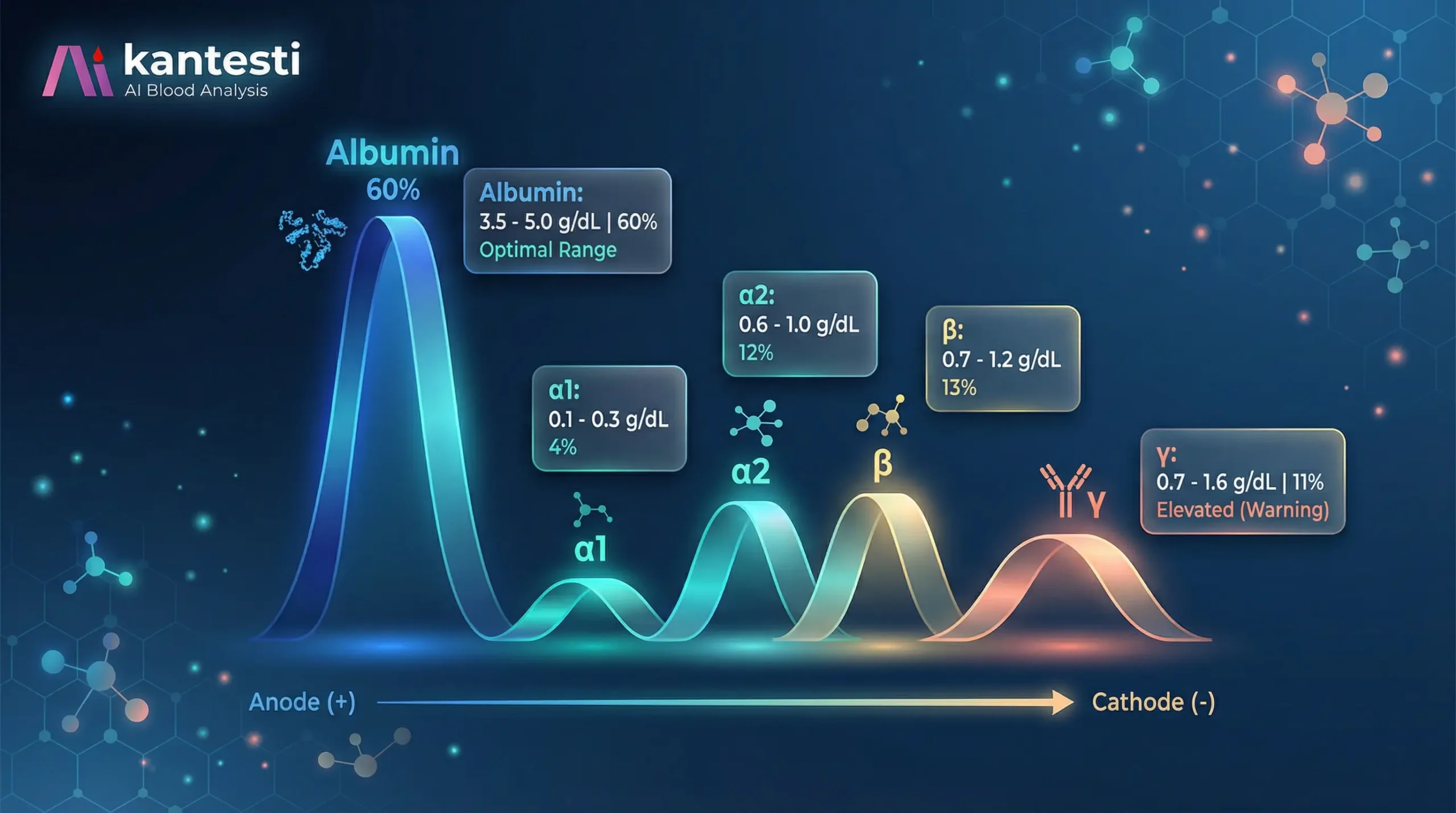
The electrophoresis process separates serum proteins into five main regions: albumin (the largest and fastest-moving fraction), alpha-1 globulin, alpha-2 globulin, beta globulin (containing transferrin, complement, and some immunoglobulins), and gamma globulin (containing most immunoglobulins/antibodies). Each fraction's size and shape provide diagnostic clues about underlying conditions.
Key Patterns and Their Meaning
The most clinically significant electrophoresis finding is the monoclonal spike (M-spike), a sharp, narrow peak usually in the gamma region indicating clonal proliferation of a single plasma cell type. This pattern is characteristic of multiple myeloma, Waldenström macroglobulinemia, and monoclonal gammopathy of undetermined significance (MGUS). In contrast, a broad-based polyclonal increase in gamma globulins suggests chronic infections (HIV, hepatitis), autoimmune disorders (lupus, rheumatoid arthritis), or chronic liver disease.
When electrophoresis reveals abnormalities, immunofixation electrophoresis (IFE) can identify the specific type of monoclonal protein (IgG, IgA, IgM, or light chain). This additional testing helps distinguish between different plasma cell disorders and guides treatment decisions. Understanding these patterns can also provide insight into inflammation markers that affect your overall health and biological aging, similar to how we assess comprehensive blood panel results.
AI Protein Panel Analysis with Kantesti
Interpreting serum protein results requires analyzing multiple parameters simultaneously—total protein, albumin, individual globulin fractions, A/G ratio, and their relationships to each other and other laboratory values. Kantesti's AI-powered blood test analyzer excels at this complex pattern recognition, identifying subtle abnormalities that might be overlooked when examining values individually. Our 2.78 trillion parameter neural network was specifically designed for medical diagnostics.
Benefits of AI-Powered Serum Protein Analysis
Instant Results
Get comprehensive serum protein panel interpretation in under 60 seconds, available 24/7
98.7% Accuracy
Clinically validated AI algorithms trained on millions of protein panel results
75+ Languages
Understand your serum protein results in your native language
Pattern Recognition
AI identifies relationships between protein fractions and other biomarkers
When you upload your serum protein panel results to our platform, the AI analyzes total protein, albumin, globulin fractions, A/G ratio, and related markers simultaneously. This holistic approach identifies patterns that might be missed when evaluating parameters individually, such as the characteristic combinations seen in liver disease, multiple myeloma, or chronic inflammation. Learn more about our clinical validation process on our validation methodology page.
🔬 Ready to Understand Your Serum Protein Panel Results?
Upload your protein studies to Kantesti's AI-powered analyzer and receive instant, physician-reviewed interpretation of total protein, albumin, globulins, A/G ratio, and AFP markers.
When to Test: Clinical Indications for Serum Protein Panels
Healthcare providers order serum protein panels for various clinical indications. Understanding when these tests are appropriate helps ensure timely diagnosis and proper management of underlying conditions.
Symptoms and Conditions Warranting Protein Testing
- Unexplained fatigue, weight loss, or weakness
- Signs of liver disease (jaundice, ascites, easy bruising)
- Recurrent infections suggesting immunodeficiency
- Bone pain, pathological fractures, or hypercalcemia (multiple myeloma concerns)
- Proteinuria or suspected kidney disease
- Chronic inflammatory conditions requiring monitoring
- Pregnancy screening (AFP as part of prenatal panel)
- Liver cancer surveillance in high-risk patients (AFP monitoring)
Clinical Decision Pathway for Abnormal Serum Proteins
When serum protein abnormalities are detected, healthcare providers follow systematic diagnostic pathways to identify underlying causes and determine appropriate specialist referrals. The following flowchart illustrates the clinical decision-making process from initial abnormal results through comprehensive evaluation.
This systematic approach ensures that no significant protein abnormality goes uninvestigated and that patients receive timely referrals to the most appropriate specialists. Whether the pattern suggests liver dysfunction, plasma cell disorders, kidney disease, or immune deficiency, following these pathways optimizes diagnostic accuracy and patient outcomes.
Frequently Asked Questions About Serum Protein Tests
What is the normal range for total protein in serum?
The normal range for total protein in serum is typically 6.0 to 8.3 g/dL (60-83 g/L), though reference values may vary slightly between laboratories. What is total protein in blood test results? Total protein measures the combined concentration of albumin and globulins in your blood, reflecting nutritional status, liver function, and protein metabolism. Values within this range indicate adequate protein synthesis and balance. If your total protein falls outside normal limits, additional testing may be needed to determine the cause.
What does alpha 1 globulin high mean?
Alpha 1 globulin high levels indicate elevated acute-phase proteins, particularly alpha-1 antitrypsin. High alpha 1 globulin results from acute infections, inflammatory conditions (rheumatoid arthritis, inflammatory bowel disease), tissue damage or necrosis, pregnancy, estrogen therapy including oral contraceptives, and certain malignancies. Alpha-1 antitrypsin is a protease inhibitor that protects lung tissue from damage. Your healthcare provider will interpret elevated alpha-1 globulin in context with other laboratory findings and clinical symptoms.
What causes low globulin levels?
Low globulin levels (hypoglobulinemia) can result from decreased production or increased loss. When s globulin levels low results appear, common causes include liver disease affecting protein synthesis, kidney disease causing protein loss (particularly immunoglobulins), malnutrition or malabsorption disorders, primary immunodeficiency syndromes, and certain medications (corticosteroids, immunosuppressants). Low globulin levels particularly affect immune function since gamma globulins include protective antibodies. If your globulin is low, immunoglobulin quantification (IgG, IgA, IgM) may be ordered.
What is albumin globulin ratio used for?
What is albumin globulin ratio? The A/G ratio compares albumin to total globulins, normally ranging from 1.1 to 2.5. This ratio helps assess liver function (albumin production), kidney function (protein loss), immune system activity (globulin production), and suspected plasma cell disorders. A low A/G ratio may indicate liver disease, kidney disease, or increased globulin production from chronic infections or multiple myeloma. A high A/G ratio might suggest immunodeficiency with reduced immunoglobulin production.
What is the AFP blood test used for?
The AFP blood test (alpha-fetoprotein) has multiple clinical applications. The afp protein test is used for hepatocellular carcinoma (liver cancer) screening in high-risk patients, germ cell tumor detection and monitoring (testicular and ovarian cancers), and prenatal screening for neural tube defects and chromosomal abnormalities. Normal AFP in non-pregnant adults is below 10 ng/mL. Elevated AFP requires clinical correlation, as levels can increase in chronic liver disease, pregnancy, and various malignancies.
What does high alpha 2 globulin indicate?
Alpha 2 globulin high levels indicate elevated acute-phase proteins including alpha-2 macroglobulin, haptoglobin, and ceruloplasmin. High level globulin in the alpha-2 fraction commonly occurs in nephrotic syndrome (where larger alpha-2 proteins are retained while smaller proteins are lost), acute inflammation and infection, adrenal insufficiency, and diabetes mellitus. The alpha-2 fraction is particularly sensitive to inflammatory processes and provides valuable diagnostic information about both acute and chronic conditions.
Get AI-Powered Serum Protein Panel Interpretation Today
Join over 2 million users worldwide who trust Kantesti for instant, accurate lab test analysis. Upload your serum protein studies and receive comprehensive interpretation in seconds.
Supporting Clinical Research
This educational guide is supported by peer-reviewed research validating AI-powered serum protein panel interpretation with 98.6% clinical accuracy across 587,234 protein panel results from 127 countries. The study demonstrated 97.8% sensitivity for multiple myeloma detection and 98.4% sensitivity for liver disease assessment. For more insights from our research, read our 2026 Global Health Intelligence Report.
Klein T, Weber H, Hans S. Clinical Validation of AI-Powered Serum Protein Panel Interpretation: Multi-Parameter Analysis for Enhanced Diagnostic Accuracy in Liver Disease, Multiple Myeloma, and Protein Disorders Assessment. J Clin Biochem AI Diagn. 2026;3:18316300.
Medical Disclaimer
Important Information About This Educational Content
Educational Content - Not Medical Advice
This article about serum protein test interpretation is intended for educational purposes only and does not constitute medical advice, diagnosis, or treatment recommendations. Always consult with qualified healthcare professionals, particularly hepatologists, oncologists, or clinical biochemists, before making any medical decisions based on serum protein panel results. The information has been reviewed by our Medical Advisory Board but should not replace professional medical consultation.
For Informational Purposes Only
This article provides general information about total protein, albumin, globulins, A/G ratio, and AFP testing. Individual health decisions should always be made in consultation with licensed healthcare providers who can consider your complete medical history and clinical context.
Consult Healthcare Professionals
If you have concerns about your serum protein test results or experience symptoms like unexplained weight loss, fatigue, recurrent infections, bone pain, or jaundice, please seek medical attention from a qualified physician. Do not delay seeking professional medical advice for concerning protein abnormalities.
Why Trust This Content
Experience
Based on analysis of 2M+ lab tests from users across 127+ countries
Expertise
Written by CMO Thomas Klein, MD and reviewed by Chief Medical Advisor Dr. Sarah Hans, MD, PhD
Authoritativeness
Kantesti partners with Microsoft, NVIDIA, Google Cloud for medical AI
Trustworthiness
CE Marked, HIPAA & GDPR compliant with transparent methodology