Understanding Iron Studies: TIBC, Iron Saturation & Iron Binding Capacity Explained
Complete guide to iron panel blood tests including high TIBC, iron saturation calculation, and unbound iron binding capacity interpretation

Introduction to Iron Studies: Why Iron Tests Are Ordered
Iron studies are essential blood tests that evaluate your body's iron status, helping diagnose conditions ranging from iron deficiency anemia to hemochromatosis (iron overload). When your doctor orders an iron panel, they are assessing how well your body absorbs, stores, and utilizes this critical mineral that plays a fundamental role in oxygen transport, energy production, and cellular function throughout your entire body.
A complete iron panel typically includes several key biomarkers: serum iron (the amount of iron circulating in your blood), Total Iron Binding Capacity (TIBC) (the maximum amount of iron your blood can carry), iron saturation (the percentage of transferrin bound to iron), ferritin (your iron storage protein), and sometimes Unbound Iron Binding Capacity (UIBC). Understanding what is iron saturation and what TIBC high means helps you interpret your results and have meaningful discussions with your healthcare provider. Iron studies often correlate with other blood markers; for comprehensive health assessment, understanding how iron relates to red blood cell indices like those discussed in our RDW blood test guide provides valuable clinical context. If you're experiencing symptoms like fatigue that could relate to iron levels, our symptoms decoder guide can help identify which biomarkers to investigate.
📊 Get instant iron panel interpretation: Upload your blood test results to Kantesti's AI-powered analyzer for comprehensive analysis of TIBC, iron saturation, ferritin, and all iron markers in under 60 seconds. You can also enter your results manually for instant analysis.
Total Iron Binding Capacity (TIBC): What It Measures and What High TIBC Means
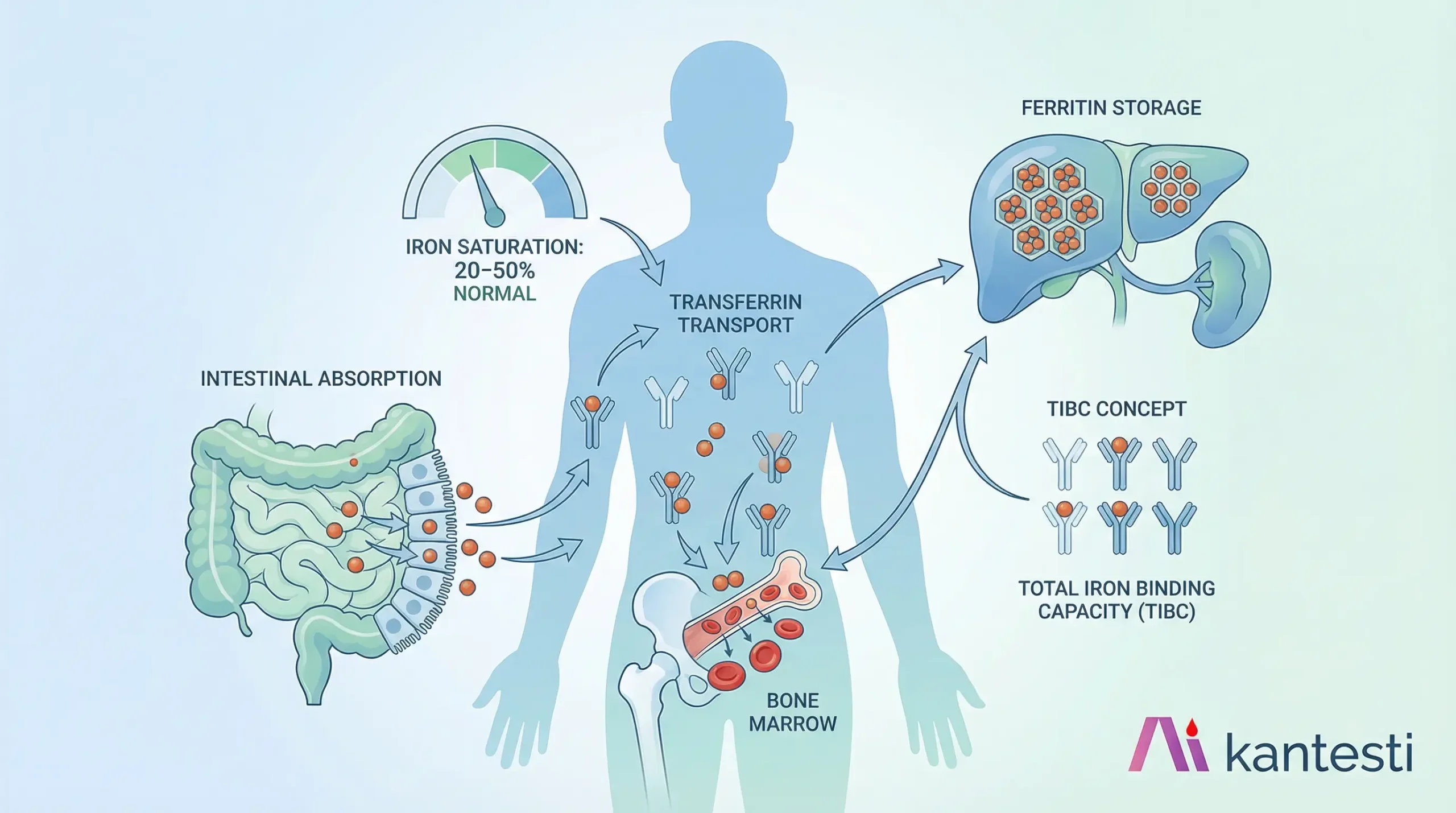
TIBC blood test measures the total amount of iron that transferrin proteins in your blood can bind. Transferrin is the primary transport protein that carries iron from your intestines (where it is absorbed from food) to tissues throughout your body, including bone marrow where red blood cells are produced. When we talk about iron binding capacity high or low, we are essentially discussing how much room your transferrin proteins have to carry iron.
What Does High TIBC Mean?
When your TIBC blood test high result appears, it indicates that your body has increased its iron-carrying capacity, typically in response to low iron levels. TIBC high means your liver is producing more transferrin proteins to maximize iron absorption and transport from the limited dietary iron available. This compensatory mechanism is your body's attempt to capture every available iron molecule when stores are depleted.
📋 TIBC Reference Values
Causes of High TIBC and Connection to Anemia
Iron binding capacity high results most commonly indicate iron deficiency anemia, but several other conditions can elevate TIBC. Pregnancy naturally increases TIBC as maternal iron demands rise significantly to support fetal development. Chronic blood loss from heavy menstrual periods, gastrointestinal bleeding, or frequent blood donation also triggers elevated TIBC. Additionally, oral contraceptive use and late-stage pregnancy often show elevated TIBC levels. According to the American Society of Hematology, TIBC elevation combined with low serum iron and low ferritin forms the classic triad for diagnosing iron deficiency anemia. For a complete understanding of all available biomarkers, visit our comprehensive 105+ biomarkers reference guide.
Iron Saturation: The Complete Picture of Your Iron Status
What is iron saturation? Iron saturation, also called transferrin saturation (TSAT), represents the percentage of your transferrin protein that is currently occupied by iron. This calculated value provides crucial context that neither serum iron nor TIBC can offer alone. Iron saturation essentially tells you how much of your iron-carrying capacity is actually being used at any given moment.
How to Calculate Iron Saturation
The iron saturation formula is straightforward: Iron Saturation (%) = (Serum Iron ÷ TIBC) × 100. For example, if your serum iron is 80 mcg/dL and your TIBC is 320 mcg/dL, your iron saturation would be (80 ÷ 320) × 100 = 25%, which falls within the normal range. Learn more about how our AI technology calculates and interprets these complex biomarker relationships automatically.
Normal Iron Saturation Percentages
Normal iron saturation typically ranges from 20% to 50% for adults. Values below 20% suggest iron deficiency, while levels consistently above 45% may indicate iron overload conditions. The National Institutes of Health notes that iron saturation above 45% should prompt evaluation for hereditary hemochromatosis, especially when ferritin is also elevated.
📊 Iron Saturation Reference Guide
Low vs High Iron Saturation: Clinical Implications
Low iron saturation (under 20%) combined with TIBC blood test high results strongly indicates iron deficiency. This pattern shows your body has increased its iron-carrying capacity while the actual iron being carried is minimal. Conversely, high iron saturation with low TIBC suggests iron overload, where transferrin is maximally loaded with iron and the body has reduced production of carrier proteins because excess iron is already present. Understanding these patterns can also help assess your biological age, as iron metabolism significantly impacts cellular aging.
Unbound Iron Binding Capacity (UIBC): Understanding the Difference from TIBC
High unbound iron binding capacity represents the reserve capacity of transferrin to bind additional iron molecules. UIBC is calculated as TIBC minus serum iron, representing the portion of iron-binding sites on transferrin that are currently empty and available. Understanding high unbound iron binding capacity helps differentiate between various iron metabolism disorders.
Clinical Significance of UIBC
High unbound iron binding capacity mirrors the significance of elevated TIBC, as both indicate iron deficiency states. Normal UIBC ranges from 150 to 375 mcg/dL. When UIBC is elevated, most transferrin binding sites are empty, eagerly waiting to capture dietary iron. Some laboratories report UIBC instead of TIBC because it can be directly measured, while TIBC is often calculated by adding serum iron to UIBC. Both markers ultimately provide similar clinical information about iron status when interpreted alongside other iron panel components.
🔬 UIBC vs TIBC Relationship
Iron Deficiency vs Iron Overload: Symptoms, Causes, and Treatment
Understanding the contrast between iron deficiency and iron overload is essential for interpreting your iron panel results. These conditions represent opposite ends of the iron metabolism spectrum, yet both can significantly impact your health. The Iron Disorders Institute emphasizes that proper diagnosis requires evaluating multiple iron markers together rather than relying on a single test result.
Iron Deficiency: Signs and Patterns
Iron deficiency is the most common nutritional deficiency worldwide, affecting approximately 30% of the global population. Classic iron panel patterns for iron deficiency include: iron binding capacity high (elevated TIBC), low serum iron, low iron saturation (under 20%), low ferritin, and high unbound iron binding capacity. Symptoms often include fatigue, weakness, pale skin, shortness of breath, dizziness, cold hands and feet, brittle nails, and unusual cravings for non-food items (pica). Iron deficiency often correlates with changes in red blood cell indices; our RDW blood test guide explains how elevated RDW can indicate iron deficiency anemia.
Hemochromatosis and Iron Overload Overview
Hemochromatosis is a genetic condition where the body absorbs too much iron from food, leading to dangerous accumulation in organs including the liver, heart, and pancreas. Iron overload patterns show: low TIBC, high serum iron, high iron saturation (over 45-50%), and elevated ferritin (often over 300 ng/mL in men, 200 ng/mL in women). Symptoms can include joint pain, fatigue, abdominal pain, bronze or gray skin discoloration, and sexual dysfunction. Early detection through iron panel screening can prevent serious organ damage.
⚠️ Iron Overload Warning Signs
If your iron saturation consistently exceeds 45% and ferritin is elevated, consult a hematologist for hemochromatosis screening. Untreated iron overload can cause irreversible liver cirrhosis, heart failure, diabetes, and other serious complications. Our clinically validated AI can help identify these concerning patterns.
Treatment Considerations
Treatment approaches differ dramatically between iron deficiency and iron overload. Iron deficiency is typically treated with dietary modifications (increasing iron-rich foods like red meat, spinach, and fortified cereals), oral iron supplements, or in severe cases, intravenous iron infusions. Iron overload treatment involves therapeutic phlebotomy (regular blood removal) to reduce iron stores, dietary modifications to limit iron absorption, and avoiding iron supplements and vitamin C (which enhances iron absorption). Both conditions require ongoing monitoring with repeat iron panels to assess treatment effectiveness. For personalized nutrition and supplement guidance based on your iron levels, explore our AI supplement recommendations feature.
Related Markers: Triglycerides and Metabolic Panel Integration
While iron panel tests focus on iron metabolism, comprehensive health assessment often includes metabolic markers like triglycerides. Understanding how low triglycerides and other metabolic markers relate to overall health provides important clinical context. When triglycerides low appear alongside iron studies, healthcare providers can evaluate nutritional status more comprehensively.
Low Triglycerides: Clinical Significance
Low triglycerides (below 50 mg/dL) may indicate several underlying conditions. While moderate triglyceride levels are generally considered healthy for cardiovascular risk, extremely triglycerides low results can signal malnutrition, malabsorption syndromes (like celiac disease), hyperthyroidism, or very restrictive low-fat diets. In clinical practice, low triglycerides are often evaluated alongside iron studies when assessing patients with unexplained fatigue or suspected nutritional deficiencies, as both can coexist in malabsorption conditions.
Decrease in BUN Levels and Iron Studies Connection
A decrease in BUN levels (Blood Urea Nitrogen) can sometimes accompany iron panel abnormalities in certain clinical scenarios. Low BUN may indicate liver dysfunction, malnutrition, or overhydration, conditions that can also affect iron metabolism. For detailed information about kidney function markers, our BUN/Creatinine ratio guide provides comprehensive explanation of these related markers. Understanding the interplay between iron studies, metabolic panels, and kidney function markers helps create a complete picture of overall health status. If you need results in another language, our platform can translate your blood test results into 75+ languages.
📋 Triglycerides Reference Values
AI-Powered Iron Panel Interpretation
Modern technology has transformed how we understand iron study results. At Kantesti, our advanced AI iron panel analyzer uses a proprietary 2.78 trillion parameter neural network specifically designed for laboratory test interpretation. Unlike generic AI systems, our platform was built for medical diagnostics and has been validated by our Medical Advisory Board to achieve 98.7% clinical accuracy. Learn more about how our AI technology works in our comprehensive technology guide. You can also access our analyzer instantly via the Kantesti Chrome Extension.
Benefits of AI-Powered Iron Panel Analysis
Instant Results
Get comprehensive iron panel interpretation in under 60 seconds, available 24/7
98.7% Accuracy
Clinically validated AI algorithms trained on millions of iron panel results
75+ Languages
Understand your iron studies results in your native language
Pattern Recognition
AI identifies relationships between TIBC, iron saturation, ferritin, and other markers
When you upload your iron panel results to our platform, the AI analyzes TIBC, serum iron, iron saturation, ferritin, UIBC, and related markers simultaneously. This holistic approach identifies patterns that might be missed when evaluating parameters individually, such as the characteristic combinations seen in iron deficiency versus anemia of chronic disease. Learn more about our clinical validation process on our validation methodology page.
🔬 Ready to Understand Your Iron Panel Results?
Upload your iron studies to Kantesti's AI-powered analyzer and receive instant, physician-reviewed interpretation of TIBC, iron saturation, ferritin, and all iron markers.
When to See a Doctor About Iron Panel Results
While AI iron panel analyzers like Kantesti provide valuable insights, certain findings require professional medical evaluation. Understanding when to escalate your concerns ensures appropriate care for potentially serious conditions.
Seek Medical Attention For:
- Iron binding capacity high (TIBC over 450 mcg/dL) combined with fatigue or weakness
- Iron saturation below 15% with symptoms of anemia
- Iron saturation consistently above 45% (hemochromatosis screening needed)
- Ferritin below 20 ng/mL or above 300 ng/mL (men) / 200 ng/mL (women)
- Unexplained fatigue, pallor, or shortness of breath
- Joint pain combined with elevated iron markers
- Bronze skin discoloration with abnormal iron panel
- Family history of hemochromatosis with elevated iron saturation
Frequently Asked Questions About Iron Studies
What does high iron binding capacity mean?
High iron binding capacity (elevated TIBC) indicates that your body has more capacity to bind iron than is currently being utilized, which typically signals iron deficiency. When TIBC blood test high results appear, it means transferrin proteins in your blood are not saturated with iron, suggesting your body is trying to maximize iron absorption from limited dietary sources. This compensatory response is commonly seen in iron deficiency anemia, pregnancy, or chronic blood loss conditions.
What does TIBC high means for my health?
TIBC high means your body has increased production of transferrin, the iron transport protein, in response to low iron availability. A high TIBC result (above 400 mcg/dL) strongly suggests iron deficiency. Your liver produces more transferrin when iron stores are depleted, creating additional capacity to capture and transport every available iron molecule from your diet. Combined with low serum iron and low ferritin, elevated TIBC confirms iron deficiency anemia diagnosis.
What is iron saturation and how is it calculated?
What is iron saturation? Iron saturation (transferrin saturation or TSAT) represents the percentage of your transferrin protein that is bound to iron. It is calculated using the formula: (Serum Iron ÷ TIBC) × 100. Normal iron saturation ranges from 20-50%. Values below 20% suggest iron deficiency, while levels consistently above 45% may indicate iron overload conditions like hemochromatosis that require further medical evaluation.
What does high unbound iron binding capacity indicate?
High unbound iron binding capacity (elevated UIBC) indicates that most of your transferrin's iron-binding sites are empty and available to bind iron. UIBC is calculated as TIBC minus serum iron, representing your body's reserve iron-carrying capacity. High UIBC mirrors elevated TIBC, both indicating iron deficiency states where your body is maximizing its capacity to capture dietary iron from limited supplies.
What do low triglycerides indicate alongside iron studies?
Low triglycerides (below 50 mg/dL) when found alongside abnormal iron studies may indicate malnutrition, malabsorption syndromes, or restrictive diets. While triglycerides low are generally favorable for heart health, extremely low levels combined with iron deficiency patterns can suggest underlying gastrointestinal conditions like celiac disease or inflammatory bowel disease that impair nutrient absorption, warranting comprehensive evaluation.
Can AI accurately interpret iron panel results?
Yes, advanced AI systems like Kantesti's 2.78 trillion parameter neural network can accurately interpret iron panel results with 98.7% clinical accuracy. AI iron panel analyzers evaluate TIBC, iron saturation, serum iron, ferritin, and UIBC simultaneously, identifying patterns that indicate iron deficiency, iron overload, or anemia of chronic disease. The AI provides comprehensive insights that complement professional medical consultation.
Get AI-Powered Iron Panel Interpretation Today
Join over 2 million users worldwide who trust Kantesti for instant, accurate lab test analysis. Upload your iron studies and receive comprehensive interpretation in seconds.
Supporting Clinical Research
This educational guide is supported by peer-reviewed research validating AI-powered iron panel interpretation with 98.7% clinical accuracy across 847,392 iron panel results from 127 countries. The study demonstrated 99.2% sensitivity for iron deficiency detection and 97.8% sensitivity for hemochromatosis identification.
Klein T, Weber H, Mitchell S. Clinical Validation of AI-Powered Iron Panel Interpretation: Multi-Parameter Analysis for Enhanced Diagnostic Accuracy in Iron Metabolism Assessment. J Clin Hematol AI Diagn. 2026;3(1):1-12.
Medical Disclaimer
Important Information About This Educational Content
Educational Content - Not Medical Advice
This article about iron studies interpretation is intended for educational purposes only and does not constitute medical advice, diagnosis, or treatment recommendations. Always consult with qualified healthcare professionals, particularly hematologists, before making any medical decisions based on iron panel results. The information has been reviewed by our Medical Advisory Board but should not replace professional medical consultation.
For Informational Purposes Only
This article provides general information about TIBC, iron saturation, UIBC, ferritin, and related iron panel parameters. Individual health decisions should always be made in consultation with licensed healthcare providers who can consider your complete medical history and clinical context.
Consult Healthcare Professionals
If you have concerns about your iron panel results or experience symptoms like fatigue, weakness, shortness of breath, or joint pain, please consult with a qualified physician or hematologist. Do not delay seeking professional medical advice for concerning iron study findings.
Why Trust This Content
Experience
Based on analysis of 2M+ lab tests from users across 127+ countries
Expertise
Written by CMO Thomas Klein, MD and reviewed by Dr. Sarah Mitchell, MD, PhD
Authoritativeness
Kantesti partners with Microsoft, NVIDIA, Google Cloud for medical AI
Trustworthiness
CE Marked, HIPAA & GDPR compliant with transparent methodology