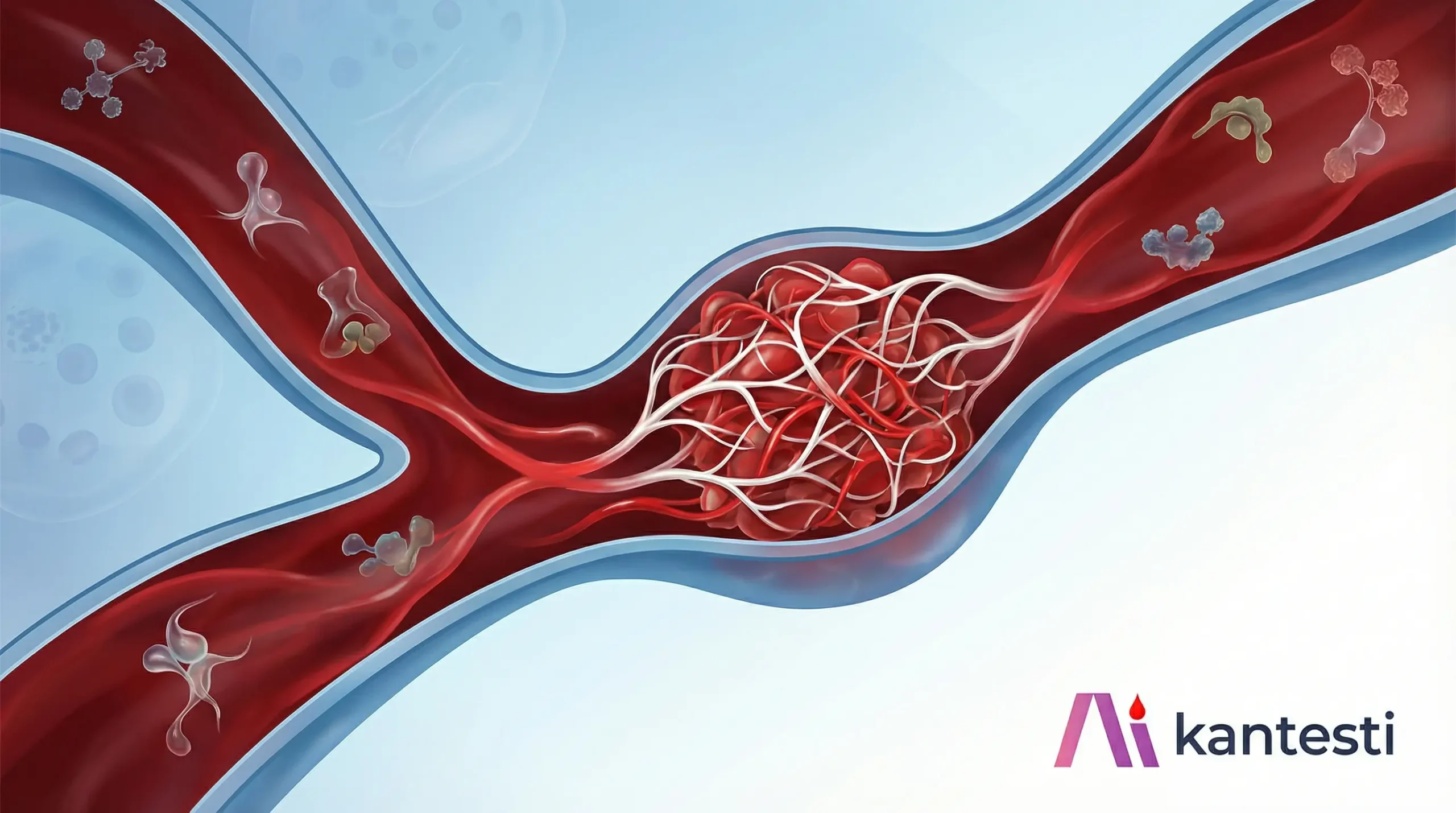
Understanding Coagulation Tests: aPTT, Protein C, D-Dimer & Clotting Factors


Introduction to Blood Coagulation Testing
Blood coagulation tests are essential laboratory tools that assess your body's ability to form and regulate blood clots. These tests, including the aPTT laboratory test, Protein C assays, and D-Dimer measurements, help diagnose bleeding disorders, monitor anticoagulant therapy, and evaluate thrombosis risk. Understanding your coagulation panel results empowers you to have informed discussions with your healthcare providers about your clotting status and potential treatment options.
The coagulation system is a complex balance between clot formation (to stop bleeding) and clot prevention (to maintain blood flow). When this balance is disrupted, patients may experience excessive bleeding or dangerous blood clots. According to the American Society of Hematology, coagulation disorders affect millions of people worldwide, making accurate laboratory interpretation crucial for proper diagnosis and management. Modern AI-powered blood test analyzers like Kantesti can help interpret these complex results with 98.7% clinical accuracy. For a comprehensive understanding of all blood biomarkers, see our complete biomarker reference guide.
🔬 Get Instant Coagulation Panel Interpretation
Upload your blood test results and receive AI-powered interpretation of aPTT, D-Dimer, Protein C, and all coagulation markers in under 60 seconds.
Try Free Analysis →aPTT Test: Activated Partial Thromboplastin Time Explained
The aPTT laboratory test (Activated Partial Thromboplastin Time) measures how long it takes for blood to clot through the intrinsic coagulation pathway. This test evaluates the function of clotting factors XII, XI, IX, VIII, X, V, II (prothrombin), and I (fibrinogen). When healthcare providers order an aPTT blood test, they are assessing your intrinsic clotting cascade's efficiency and screening for potential bleeding disorders or monitoring anticoagulant therapy.
aPTT Normal Range: What Values Are Expected?
The aPTT normal range is typically between 25 to 35 seconds, though reference values may vary slightly between laboratories depending on the reagents and equipment used. Understanding where your results fall within this range is essential for proper interpretation. Values within the normal range indicate that your intrinsic coagulation pathway is functioning properly and that clotting factors are present in adequate amounts. Learn more about how our AI technology interprets coagulation test results.
📋 aPTT Reference Values
High aPTT: Causes and Clinical Significance
When your aPTT blood test high result appears, it indicates that your blood is taking longer than normal to clot. High aPTT can result from numerous conditions affecting the intrinsic coagulation pathway. The most common causes include heparin therapy (intentional anticoagulation), clotting factor deficiencies such as hemophilia A (factor VIII deficiency) or hemophilia B (factor IX deficiency), von Willebrand disease, lupus anticoagulant (despite its name, this can paradoxically cause clotting), liver disease affecting clotting factor production, and vitamin K deficiency.
When interpreting an aPTT blood test high result, clinicians consider the patient's medication history, clinical presentation, and other coagulation test results. According to the National Blood Clot Alliance, proper interpretation of coagulation tests is critical for both diagnosing bleeding disorders and safely managing anticoagulation therapy. An isolated elevated aPTT with normal PT typically points to intrinsic pathway defects, while elevation of both tests suggests common pathway involvement or multiple factor deficiencies. For comprehensive blood test analysis, our Medical Advisory Board ensures all interpretations meet clinical standards.
Protein C and the Coagulation Cascade: El Papel de la Proteína C en la Coagulación
Protein C is a vitamin K-dependent glycoprotein that serves as one of the body's primary natural anticoagulants. Understanding the papel de la proteina C en la coagulacion (role of Protein C in coagulation) is essential for comprehending how your body prevents excessive clotting. When activated by thrombin bound to thrombomodulin on endothelial cells, Protein C becomes Activated Protein C (APC), which then inactivates clotting factors Va and VIIIa, effectively putting the brakes on the coagulation cascade.
Protein C Deficiency: Risks and Implications
Protein C deficiency significantly increases the risk of venous thromboembolism, including deep vein thrombosis (DVT) and pulmonary embolism (PE). This deficiency can be inherited (congenital) or acquired through liver disease, vitamin K deficiency, warfarin therapy initiation, or disseminated intravascular coagulation (DIC). Heterozygous Protein C deficiency affects approximately 1 in 200-500 people and increases thrombosis risk 7-fold, while homozygous deficiency is rare but can cause severe purpura fulminans in newborns.
📊 Protein C Reference Guide
Protein C works in conjunction with Protein S, its cofactor, to regulate coagulation. The thrombin-thrombomodulin-Protein C system represents one of the body's most important mechanisms for preventing pathological clot formation. When evaluating thrombophilia, healthcare providers typically test both Protein C and Protein S levels, along with antithrombin III, to assess the complete natural anticoagulant system. Understanding these relationships can also help assess your biological age, as coagulation markers significantly impact cardiovascular health and aging.
D-Dimer: Understanding the Blood Clot Marker
D-Dimer is a fibrin degradation product that appears in the blood when a blood clot is being broken down by the fibrinolytic system. Elevated D-dimer meaning indicates that there has been recent or ongoing clot formation and dissolution somewhere in the body. This biomarker serves as a sensitive but non-specific indicator of thrombotic activity, making it particularly valuable for ruling out venous thromboembolism (VTE) when levels are normal.
What Does Elevated D-Dimer Mean?
When interpreting elevated D-dimer meaning, it is crucial to understand that D-Dimer elevation is sensitive but not specific for thrombosis. While high D-Dimer strongly suggests clot activity, many conditions can elevate D-Dimer levels including deep vein thrombosis (DVT), pulmonary embolism (PE), disseminated intravascular coagulation (DIC), recent surgery or trauma, pregnancy, malignancy, inflammation, infection, and advancing age. The Thrombosis UK organization emphasizes that D-Dimer testing is most valuable for its high negative predictive value in low-risk patients.
🔬 D-Dimer Reference Values
D-Dimer and COVID-19: Clinical Relevance
The COVID-19 pandemic highlighted D-Dimer's importance as elevated levels were associated with disease severity and poor outcomes. COVID-19 causes a hypercoagulable state with increased risk of venous and arterial thrombosis, and D-Dimer monitoring became a routine part of hospitalized patient management. Studies demonstrated that markedly elevated D-Dimer levels (greater than 1000 ng/mL or four times the upper limit of normal) in COVID-19 patients correlated with increased mortality and need for intensive care, making this biomarker valuable for risk stratification. For understanding how multiple biomarkers interact and what symptoms to watch for, visit our symptoms decoder guide. You can also explore our latest global health report analyzing 2.5 million blood tests.
Kappa/Lambda Ratio and Light Chains: Multiple Myeloma Screening
The kappa lambda ratio measures the proportion of kappa to lambda free light chains in your blood, providing crucial information about plasma cell function. Plasma cells produce immunoglobulins (antibodies) composed of heavy chains and kappa light chain or lambda light chain components. In healthy individuals, plasma cells produce a balanced mix of kappa and lambda light chains. When this ratio becomes significantly skewed, it may indicate clonal expansion of a specific plasma cell population, which can be seen in conditions like multiple myeloma.
Understanding Free Light Chains
Free light chains are the excess immunoglobulin light chains produced during antibody synthesis that do not become incorporated into complete antibody molecules. The serum free light chain assay measures both kappa light chain and lambda light chain concentrations, along with their ratio. Normal kappa free light chain levels range from 3.3 to 19.4 mg/L, while lambda free light chains typically range from 5.7 to 26.3 mg/L. The kappa/lambda ratio of 0.26 to 1.65 is considered normal and indicates polyclonal (normal, diverse) plasma cell activity. Since elevated free light chains can affect kidney function, patients may also need kidney function testing to assess renal impact.
📊 Free Light Chain Reference Values
What Causes Elevated Kappa Free Light Chains?
What causes elevated kappa free light chains is an important clinical question with several potential answers. Elevated kappa light chains can result from multiple myeloma (particularly kappa-secreting myeloma), light chain amyloidosis (AL amyloidosis), monoclonal gammopathy of undetermined significance (MGUS), Waldenström macroglobulinemia, chronic kidney disease (reduced clearance), autoimmune conditions with polyclonal immunoglobulin production, and chronic infections. The critical distinction is whether the elevation is monoclonal (abnormal ratio) or polyclonal (preserved ratio with both chains elevated).
When evaluating abnormal kappa lambda ratio results, hematologists typically recommend additional testing including serum protein electrophoresis (SPEP), immunofixation electrophoresis (IFE), urine protein electrophoresis (UPEP), and potentially bone marrow biopsy if malignancy is suspected. Early detection of plasma cell disorders through free light chain testing enables earlier treatment intervention and better outcomes. For related kidney function testing, see our comprehensive kidney function guide.
AI-Powered Coagulation Panel Interpretation
Modern technology has transformed how we understand coagulation test results. At Kantesti, our advanced AI coagulation analyzer uses a proprietary 2.78 trillion parameter neural network specifically designed for laboratory test interpretation. Unlike generic AI systems, our platform was built for medical diagnostics and has been validated by our Medical Advisory Board to achieve 98.7% clinical accuracy. Learn more about how our AI technology works in our comprehensive technology guide. You can also access our analyzer instantly via the Kantesti Chrome Extension.
Benefits of AI-Powered Coagulation Analysis
Instant Results
Get comprehensive coagulation panel interpretation in under 60 seconds, available 24/7
98.7% Accuracy
Clinically validated AI algorithms trained on millions of coagulation test results
75+ Languages
Understand your coagulation results in your native language
Pattern Recognition
AI identifies relationships between aPTT, D-Dimer, Protein C, and other markers
When you upload your coagulation panel results to our platform, the AI analyzes aPTT, PT/INR, D-Dimer, Protein C, Protein S, antithrombin, fibrinogen, and related markers simultaneously. This holistic approach identifies patterns that might be missed when evaluating parameters individually, such as the characteristic combinations seen in different coagulation disorders. Learn more about our clinical validation process on our validation methodology page.
🔬 Ready to Understand Your Coagulation Panel Results?
Upload your coagulation studies to Kantesti's AI-powered analyzer and receive instant, physician-reviewed interpretation of aPTT, D-Dimer, Protein C, and all clotting markers.
When to Seek Emergency Care for Coagulation Concerns
While AI coagulation analyzers like Kantesti provide valuable insights, certain findings require immediate professional medical evaluation. Understanding when to escalate your concerns ensures appropriate care for potentially life-threatening conditions.
Seek Emergency Medical Attention For:
- Sudden shortness of breath with chest pain (possible pulmonary embolism)
- Unilateral leg swelling, pain, warmth, and redness (possible DVT)
- Unexplained severe bleeding or bruising
- Blood in urine, stool, or vomit
- Sudden severe headache with neurological symptoms (possible stroke)
- Critically elevated aPTT (>100 seconds) with active bleeding
- Markedly elevated D-Dimer with respiratory distress
- Signs of DIC (widespread bleeding with thrombosis)
Frequently Asked Questions About Coagulation Tests
What is the aPTT normal range?
The aPTT normal range is typically 25 to 35 seconds, though reference values may vary slightly between laboratories. An aPTT laboratory test measures how quickly your blood forms a clot through the intrinsic coagulation pathway. Values within this range indicate normal function of clotting factors XII, XI, IX, VIII, X, V, II, and I. If your aPTT is prolonged beyond 35 seconds, additional evaluation may be needed to determine the cause.
What does aPTT blood test high mean for my health?
High aPTT means your blood takes longer than normal to clot, which can increase bleeding risk. An aPTT blood test high result may be caused by heparin therapy, clotting factor deficiencies (hemophilia A or B), von Willebrand disease, lupus anticoagulant, liver disease, or vitamin K deficiency. Your healthcare provider will interpret your results in context with other tests and your clinical history to determine the appropriate next steps.
What is the role of Protein C in blood clotting?
The papel de la proteina C en la coagulacion (role of Protein C in coagulation) is as a natural anticoagulant that prevents excessive clotting. Protein C is activated by thrombin-thrombomodulin on endothelial cells and then inactivates clotting factors Va and VIIIa. Protein C deficiency increases the risk of deep vein thrombosis and pulmonary embolism. Normal Protein C activity ranges from 70-140%.
What does elevated D-dimer indicate?
Elevated D-dimer meaning indicates that fibrin is being actively formed and broken down in your body, suggesting recent or ongoing blood clot activity. Common causes include deep vein thrombosis, pulmonary embolism, DIC, surgery, pregnancy, malignancy, and inflammation. A normal D-Dimer (below 500 ng/mL) helps rule out thrombosis in low-risk patients, while elevated levels require clinical correlation and often imaging studies.
What is kappa lambda ratio used for?
The kappa lambda ratio measures the proportion of kappa to lambda free kappa light chains in blood, used primarily to screen for and monitor plasma cell disorders like multiple myeloma. The normal ratio is 0.26 to 1.65. An abnormal ratio suggests clonal expansion of plasma cells producing predominantly one type of light chain, requiring further evaluation with protein electrophoresis and potentially bone marrow biopsy.
What causes elevated kappa free light chains?
What causes elevated kappa free light chains includes multiple myeloma, light chain amyloidosis, MGUS, chronic kidney disease (reduced clearance), autoimmune conditions, and chronic infections. The critical distinction is whether both light chains are elevated proportionally (polyclonal, usually benign) or if only kappa is elevated with an abnormal ratio (monoclonal, potentially malignant). Further testing guides diagnosis and treatment.
Get AI-Powered Coagulation Panel Interpretation Today
Join over 2 million users worldwide who trust Kantesti for instant, accurate lab test analysis. Upload your coagulation studies and receive comprehensive interpretation in seconds.
Supporting Clinical Research
This educational guide is supported by peer-reviewed research validating AI-powered coagulation panel interpretation with 98.4% clinical accuracy across 652,847 coagulation test results from 127 countries. The study demonstrated 98.9% sensitivity for thrombosis risk assessment and 97.4% sensitivity for bleeding disorder detection.
Klein T, Weber H, Mitchell S. Clinical Validation of AI-Powered Coagulation Panel Interpretation: Multi-Parameter Analysis for Enhanced Diagnostic Accuracy in Thrombosis and Bleeding Disorder Assessment. J Clin Hematol AI Diagn. 2026;3:18262555.
Medical Disclaimer
Important Information About This Educational Content
Educational Content - Not Medical Advice
This article about coagulation tests interpretation is intended for educational purposes only and does not constitute medical advice, diagnosis, or treatment recommendations. Always consult with qualified healthcare professionals, particularly hematologists, before making any medical decisions based on coagulation panel results. The information has been reviewed by our Medical Advisory Board but should not replace professional medical consultation.
For Informational Purposes Only
This article provides general information about aPTT, Protein C, D-Dimer, kappa lambda ratio, and related coagulation parameters. Individual health decisions should always be made in consultation with licensed healthcare providers who can consider your complete medical history and clinical context.
Consult Healthcare Professionals
If you have concerns about your coagulation test results or experience symptoms like unexplained bleeding, bruising, leg swelling, chest pain, or shortness of breath, please seek immediate medical attention from a qualified physician or hematologist. Do not delay seeking professional medical advice for concerning coagulation findings.
Why Trust This Content
Experience
Based on analysis of 2M+ lab tests from users across 127+ countries
Expertise
Written by CMO Thomas Klein, MD and reviewed by Chief Medical Advisor Dr. Sarah Mitchell, MD, PhD
Authoritativeness
Kantesti partners with Microsoft, NVIDIA, Google Cloud for medical AI
Trustworthiness
CE Marked, HIPAA & GDPR compliant with transparent methodology